Prompt Engineering, Context Engineering và Harness Engineering giải quyết ba bài toán có liên quan nhưng khác nhau: hướng dẫn AI, cung cấp thông tin phù hợp và thiết kế môi trường giúp AI thực hiện công việc có kiểm soát.
Vậy doanh nghiệp nên đầu tư vào đâu trước? Trong bài viết này, HARS sẽ giúp bạn phân biệt ba khái niệm, so sánh vai trò của từng phương pháp và xác định hướng đầu tư phù hợp với giai đoạn ứng dụng AI của tổ chức.
Những điểm chính cần biết
- Prompt Engineering: Tối ưu cách hướng dẫn mô hình AI thực hiện một nhiệm vụ.
- Context Engineering: Lựa chọn và tổ chức thông tin để AI có đủ bối cảnh xử lý công việc.
- Harness Engineering: Thiết kế hệ thống vận hành, công cụ, quyền hạn và cơ chế kiểm chứng xung quanh AI Agent.
- So sánh Prompt, Context và Harness Engineering: Hiểu phạm vi, đầu ra và giới hạn của từng phương pháp.
- Lộ trình đầu tư AI: Xác định khi nào cần tối ưu prompt, xây dựng nền tảng tri thức hoặc đầu tư vào Harness.
- Ứng dụng thực tế: Những sai lầm thường gặp và cách doanh nghiệp tiếp cận AI có kiểm soát.
1. Prompt Engineering là gì?
Prompt Engineering là quá trình thiết kế và cải tiến câu lệnh, chỉ dẫn hoặc ví dụ đầu vào để mô hình AI tạo ra kết quả phù hợp với yêu cầu.
Đây thường là bước đầu tiên khi cá nhân và doanh nghiệp bắt đầu sử dụng AI tạo sinh. Thay vì chỉ đặt câu hỏi chung chung, người dùng xác định rõ mục tiêu, bối cảnh, định dạng đầu ra và các tiêu chí cần đáp ứng.
Prompt Engineering phù hợp với nhiều tác vụ như:
- Soạn thảo email, báo cáo và nội dung marketing.
- Tóm tắt tài liệu hoặc phân tích thông tin.
- Hỗ trợ lên ý tưởng và xây dựng kế hoạch.
- Chuẩn hóa cách phản hồi cho những yêu cầu đơn giản.
Ví dụ, thay vì yêu cầu AI “viết email cho khách hàng”, doanh nghiệp có thể cung cấp vai trò người viết, mục đích email, đối tượng nhận, giọng điệu và độ dài mong muốn.
Cách hướng dẫn rõ ràng giúp cải thiện chất lượng đầu ra mà không nhất thiết phải thay đổi mô hình AI.
Tuy nhiên, Prompt Engineering không thể tự giải quyết mọi vấn đề. Nếu AI thiếu dữ liệu nội bộ, không được kết nối với hệ thống cần thiết hoặc không có cơ chế kiểm tra kết quả, một prompt tốt vẫn chưa đủ để bảo đảm công việc hoàn thành chính xác.
2. Context Engineering là gì?
Context Engineering là quá trình lựa chọn, tổ chức, cập nhật và cung cấp thông tin phù hợp cho mô hình AI tại thời điểm thực hiện nhiệm vụ.
Trong môi trường doanh nghiệp, thông tin này có thể bao gồm:
- Tài liệu và quy trình nội bộ.
- Lịch sử hội thoại và trạng thái công việc.
- Dữ liệu khách hàng được phép truy cập.
- Quy định, chính sách và hướng dẫn nghiệp vụ.
- Tài liệu kiến trúc, mã nguồn và quyết định kỹ thuật.
Nếu Prompt Engineering trả lời câu hỏi “Nên hướng dẫn AI như thế nào?”, Context Engineering tập trung vào câu hỏi “AI cần biết những gì để thực hiện nhiệm vụ chính xác?”.
Ví dụ, khi nhân viên hỏi AI về chính sách chăm sóc khách hàng, chất lượng câu trả lời không chỉ phụ thuộc vào câu hỏi mà còn vào việc AI có truy xuất được chính sách hiện hành, phiên bản tài liệu đúng và thông tin phù hợp với trường hợp cụ thể hay không.
Ngữ cảnh nhiều hơn không đồng nghĩa với kết quả tốt hơn. Việc đưa quá nhiều tài liệu không liên quan vào mô hình có thể làm tăng chi phí xử lý và khiến thông tin quan trọng khó được sử dụng hiệu quả. Vì vậy, doanh nghiệp cần chú trọng chất lượng, tính cập nhật, khả năng truy xuất và quyền truy cập dữ liệu.
OpenAI cũng nhấn mạnh tầm quan trọng của việc cung cấp hướng dẫn rõ ràng, ngắn gọn và có cấu trúc cho các coding agent thay vì phụ thuộc vào những tài liệu dài, khó điều hướng.
Gợi ý hình ảnh: Sơ đồ Context Engineering minh họa cách AI tiếp nhận tài liệu, dữ liệu và tri thức doanh nghiệp.
Alt text: Context Engineering giúp AI truy xuất đúng ngữ cảnh và tri thức doanh nghiệp.
3. Harness Engineering là gì?
Harness Engineering là quá trình thiết kế, xây dựng và cải tiến môi trường vận hành xung quanh AI Agent, bao gồm công cụ, ngữ cảnh, quyền hạn, trạng thái công việc, cơ chế kiểm chứng, xử lý lỗi và điểm phê duyệt của con người.
Một cách khái quát, mối quan hệ giữa agent và harness có thể được diễn đạt như sau:
AI Agent = Model + Harness
Đây là công thức giải thích vai trò của Harness, không phải định nghĩa kỹ thuật duy nhất cho mọi kiến trúc AI Agent.
Nếu Context Engineering giúp AI có đúng thông tin, Harness Engineering giúp toàn bộ hệ thống thực hiện công việc trong những giới hạn và điều kiện đã được thiết kế.
Một AI Harness có thể bao gồm:
- Công cụ và API mà agent được phép sử dụng.
- Quy tắc phân quyền và giới hạn hành động.
- Bộ nhớ và cơ chế duy trì trạng thái giữa các bước.
- Unit test, kiểm tra dữ liệu và quy trình xác minh đầu ra.
- Log, metric và trace để theo dõi hoạt động.
- Cơ chế thử lại, xử lý lỗi và chuyển nhiệm vụ cho con người.
- Các điểm phê duyệt trước khi thực hiện hành động quan trọng.
Ví dụ, một AI Agent hỗ trợ xử lý khiếu nại không chỉ cần hiểu quy trình chăm sóc khách hàng. Hệ thống còn phải xác định agent được phép xem dữ liệu nào, có thể đưa ra quyết định gì, khi nào cần chuyển cho nhân viên phụ trách và cách lưu lại lịch sử xử lý.
Đó là sự khác biệt giữa việc giúp AI trả lời tốt hơn và việc xây dựng một hệ thống AI có thể tham gia vào quy trình vận hành thực tế.
Theo các tài liệu chuyên môn về Harness Engineering, hiệu quả của agent phụ thuộc không chỉ vào năng lực mô hình mà còn vào chất lượng môi trường thực thi và các cơ chế phản hồi.
Đọc thêm: Kiến thức ngành từ HARS.
4. So sánh Prompt Engineering, Context Engineering và Harness Engineering
Ba phương pháp này không loại trừ lẫn nhau. Chúng bổ trợ cho nhau và có thể cùng tồn tại trong một hệ thống AI.
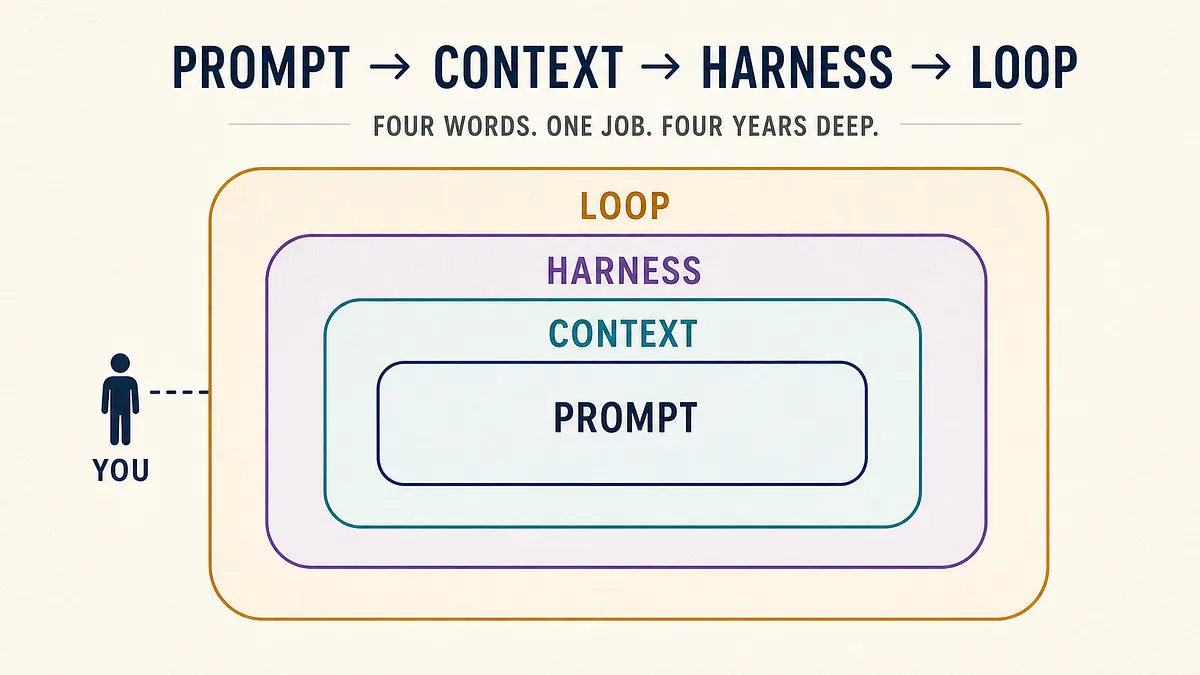
Có thể hình dung Prompt Engineering tập trung vào chỉ dẫn, Context Engineering quản lý thông tin cần thiết, còn Harness Engineering bao quát môi trường thực thi và kiểm soát. Trong một kiến trúc cụ thể, ranh giới giữa các thành phần có thể giao nhau.
| Tiêu chí | Prompt Engineering | Context Engineering | Harness Engineering |
|---|---|---|---|
| Câu hỏi cốt lõi | Hướng dẫn AI thế nào? | AI cần biết gì? | Hệ thống AI vận hành và được kiểm soát ra sao? |
| Phạm vi chính | Chỉ dẫn và đầu vào | Thông tin, dữ liệu và trạng thái liên quan | Toàn bộ môi trường thực thi agent |
| Thành phần tiêu biểu | Prompt, ví dụ, định dạng đầu ra | Tài liệu, dữ liệu, lịch sử hội thoại, truy xuất tri thức | Công cụ, quyền hạn, kiểm thử, bộ nhớ, giám sát và phê duyệt |
| Mục tiêu | Cải thiện mức độ phù hợp của câu trả lời | Cung cấp đúng thông tin cho nhiệm vụ | Giúp agent thực hiện công việc có kiểm soát và kiểm chứng |
| Người phụ trách thường gặp | Người dùng, chuyên gia prompt, đội sản phẩm | Đội dữ liệu, tri thức, sản phẩm và nghiệp vụ | Kiến trúc sư giải pháp, đội kỹ thuật, bảo mật và chuyên gia nghiệp vụ |
| Đầu ra mong muốn | Câu trả lời đáp ứng yêu cầu | Kết quả dựa trên đúng bối cảnh | Tác vụ hoàn thành theo tiêu chí đã xác định |
| Rủi ro khi thiếu | AI hiểu sai yêu cầu | AI thiếu hoặc sử dụng sai thông tin | Lỗi không được phát hiện, quyền hạn không phù hợp hoặc quy trình thất bại |
Ví dụ về giá trị của Harness Engineering
Addy Osmani đã phân tích vai trò của Harness Engineering đối với hiệu quả của coding agent. Bài học quan trọng là chất lượng thực thi có thể được cải thiện thông qua việc điều chỉnh môi trường, công cụ và vòng phản hồi, thay vì chỉ tập trung nâng cấp mô hình.
Tuy nhiên, mức cải thiện phụ thuộc vào bài toán, phương pháp đánh giá và điều kiện thử nghiệm. Doanh nghiệp nên kiểm chứng bằng các chỉ số của chính mình trước khi kết luận rằng thay đổi Harness sẽ mang lại một mức tăng hiệu suất cụ thể.
Gợi ý hình ảnh: Sơ đồ ba lớp Prompt Engineering, Context Engineering và Harness Engineering.
Alt text: So sánh Prompt Engineering, Context Engineering và Harness Engineering trong doanh nghiệp.
5. Doanh nghiệp nên đầu tư vào Prompt, Context hay Harness Engineering?
Không có một lựa chọn duy nhất phù hợp với mọi doanh nghiệp. Hướng đầu tư nên dựa trên loại công việc cần AI thực hiện, mức độ phức tạp, dữ liệu liên quan và hậu quả có thể xảy ra khi AI mắc lỗi.
5.1. Giai đoạn thử nghiệm: Tối ưu Prompt Engineering
Nếu nhân viên chủ yếu sử dụng AI để viết nội dung, dịch thuật, tóm tắt tài liệu hoặc lên ý tưởng, doanh nghiệp có thể bắt đầu bằng việc đào tạo kỹ năng sử dụng AI và chuẩn hóa các mẫu prompt.
Các ưu tiên gồm:
- Xác định mục tiêu và tiêu chí đầu ra.
- Cung cấp chỉ dẫn rõ ràng.
- Xây dựng thư viện prompt có thể tái sử dụng.
- Hướng dẫn nhân viên kiểm tra kết quả trước khi sử dụng.
Ở giai đoạn này, doanh nghiệp chưa nhất thiết phải xây dựng một hệ thống agent phức tạp. Tuy nhiên, các yêu cầu liên quan đến dữ liệu nhạy cảm và bảo mật vẫn phải được kiểm soát ngay từ đầu.
5.2. Giai đoạn trợ lý tri thức: Đầu tư vào Context Engineering
Khi AI cần trả lời dựa trên tài liệu, quy trình và tri thức nội bộ, doanh nghiệp nên ưu tiên xây dựng nền tảng dữ liệu và ngữ cảnh.
Các công việc quan trọng bao gồm:
- Chuẩn hóa và phân loại tài liệu nội bộ.
- Xác định nguồn dữ liệu đáng tin cậy.
- Cập nhật phiên bản quy trình và chính sách.
- Thiết lập quyền truy cập theo vai trò.
- Đánh giá độ chính xác và tính phù hợp của câu trả lời.
Ví dụ, khi nhân viên hỏi Kimmy về quy trình xử lý một nghiệp vụ, chất lượng phản hồi sẽ phụ thuộc vào việc tri thức của doanh nghiệp đã được thu thập, chuẩn hóa và cung cấp đúng phạm vi hay chưa.
Ở giai đoạn này, doanh nghiệp cần chú trọng quản trị tri thức và chất lượng dữ liệu, thay vì chỉ tăng độ dài prompt hoặc bổ sung thêm tài liệu một cách thiếu chọn lọc.
5.3. Giai đoạn AI Agent thực hiện công việc: Đầu tư vào Harness Engineering
Khi AI chuyển từ cung cấp thông tin sang thực hiện các bước công việc, mức độ kiểm soát cần được nâng lên.
Những ứng dụng có thể bao gồm:
- Tiếp nhận và phân loại yêu cầu khách hàng.
- Hỗ trợ điều phối công việc và xử lý khiếu nại.
- Thực hiện quy trình nhiều bước thông qua các công cụ được cấp quyền.
- Theo dõi chỉ số và phát hiện các trường hợp cần cảnh báo.
- Hỗ trợ phân tích hoặc thay đổi hệ thống phần mềm.
Ở giai đoạn này, doanh nghiệp cần xác định rõ quyền hạn, tiêu chí hoàn thành, cách xử lý lỗi, khả năng truy vết và những hành động bắt buộc phải có con người phê duyệt.
Không phải mọi AI Agent đều cần một Harness phức tạp như nhau. Mức đầu tư nên tương ứng với độ phức tạp của nhiệm vụ và mức độ rủi ro.
Bảng định hướng đầu tư nhanh
| Giai đoạn | Ưu tiên | Việc cần làm trước |
|---|---|---|
| AI hỗ trợ cá nhân | Prompt Engineering | Chuẩn hóa chỉ dẫn và hướng dẫn người dùng |
| AI hỗ trợ tri thức | Context Engineering | Chuẩn hóa dữ liệu, tài liệu và quyền truy cập |
| AI thực hiện quy trình | Harness Engineering | Xây dựng công cụ, kiểm thử, giám sát và phê duyệt |
Doanh nghiệp không cần chờ hoàn thiện một giai đoạn mới bắt đầu giai đoạn tiếp theo. Prompt, context và harness thường cần được cải thiện song song, nhưng mức ưu tiên thay đổi theo mục tiêu triển khai.
Đọc thêm: Định hướng sản phẩm của HARS.
6. HARS – Giải pháp ứng dụng AI theo đặc thù doanh nghiệp
Việc đưa AI vào vận hành đòi hỏi sự kết hợp giữa công nghệ, dữ liệu, tri thức và quy trình nghiệp vụ. Đối với doanh nghiệp chưa có đội ngũ kỹ thuật chuyên trách, việc tự xây dựng toàn bộ hệ thống từ đầu có thể tạo ra nhiều thách thức về chi phí, năng lực triển khai và quản trị.
HARS định hướng phát triển các giải pháp ứng dụng AI được chuẩn hóa và cá thể hóa theo nhu cầu từng doanh nghiệp, với Kimmy là giải pháp nhân sự số hỗ trợ các hoạt động nghiệp vụ.
Tích hợp tri thức và ngữ cảnh doanh nghiệp
Một nền tảng AI hữu ích cần giúp nhân viên tiếp cận thông tin phù hợp với công việc, đồng thời có cơ chế quản lý nguồn tri thức và quyền truy cập.
Các hướng triển khai có thể bao gồm:
- Tổ chức tri thức và quy trình nghiệp vụ thành nguồn thông tin có cấu trúc.
- Hỗ trợ nhân viên tìm kiếm và sử dụng tri thức chung.
- Chuẩn hóa hướng dẫn công việc theo từng vai trò.
- Cập nhật nội dung khi quy trình hoặc chính sách thay đổi.
Hỗ trợ quy trình trong phạm vi được kiểm soát
Với các nghiệp vụ như tiếp nhận yêu cầu, hỗ trợ khách hàng hoặc phân loại khiếu nại, doanh nghiệp cần xác định rõ phạm vi AI được phép thực hiện, trường hợp phải chuyển cho người phụ trách và cách lưu lại lịch sử xử lý.
Các cơ chế kiểm soát cần được thiết kế phù hợp với tính năng thực tế của giải pháp, yêu cầu bảo mật và quy trình quản trị của từng tổ chức.
Kết nối nhu cầu của nhân viên, quản lý và lãnh đạo
Một định hướng ứng dụng AI trong doanh nghiệp là kết nối tri thức và thông tin vận hành giữa nhiều cấp độ:
- Nhân viên tiếp cận hướng dẫn và quy trình liên quan đến công việc.
- Quản lý theo dõi tiến độ và các chỉ số phù hợp.
- Ban lãnh đạo có cơ sở tổng hợp thông tin phục vụ ra quyết định.
Việc triển khai cần xác định rõ nguồn dữ liệu, quyền truy cập và cách tính các chỉ số để bảo đảm thông tin nhất quán.
Với định hướng này, doanh nghiệp có thể tiến từ việc sử dụng những prompt riêng lẻ sang xây dựng quy trình AI gắn với hoạt động thực tế.
Tìm hiểu thêm: Sự khác biệt của HARS, danh mục giải pháp và định hướng sản phẩm.
Gợi ý hình ảnh: Giao diện Kimmy hoặc sơ đồ ứng dụng nhân sự số trong doanh nghiệp.
Alt text: Kimmy, giải pháp nhân sự số ứng dụng AI của HARS.
7. Những sai lầm thường gặp khi đầu tư vào AI
Chỉ tập trung vào prompt mà bỏ qua hệ thống
Một prompt chi tiết không thể thay thế dữ liệu đáng tin cậy, quyền truy cập phù hợp và cơ chế kiểm chứng. Khi AI thực hiện công việc quan trọng, doanh nghiệp cần đánh giá toàn bộ quy trình thay vì chỉ sửa câu lệnh.
Đưa quá nhiều tài liệu vào ngữ cảnh
Tài liệu dài, trùng lặp hoặc lỗi thời có thể làm giảm hiệu quả truy xuất. Doanh nghiệp nên tổ chức tri thức theo chủ đề, kiểm soát phiên bản và đánh giá khả năng tìm đúng thông tin cần thiết.
Liên tục đổi mô hình nhưng không tìm nguyên nhân gốc
Nếu vấn đề nằm ở dữ liệu, công cụ hoặc tiêu chí đánh giá, việc đổi mô hình có thể không giải quyết được nguyên nhân. Trước khi nâng cấp, doanh nghiệp nên phân tích lỗi và đo lường hiệu quả của những thay đổi trong hệ thống.
Xây dựng Harness quá phức tạp ngay từ đầu
Một hệ thống có quá nhiều quy tắc và bước kiểm tra có thể làm tăng chi phí vận hành mà không tạo ra giá trị tương xứng. Nên bắt đầu với phạm vi nhỏ, xác định các rủi ro chính rồi mở rộng theo bằng chứng thực tế.
Giao quyền quá rộng cho AI Agent
AI Agent chỉ nên được cấp quyền cần thiết để hoàn thành nhiệm vụ. Các thao tác nhạy cảm, khó đảo ngược hoặc có tác động lớn cần có cơ chế xác nhận và giám sát phù hợp.
8. Câu hỏi thường gặp về Prompt, Context và Harness Engineering
Harness Engineering là gì?
Harness Engineering là quá trình thiết kế và cải tiến môi trường vận hành của AI Agent, bao gồm công cụ, quyền hạn, ngữ cảnh, bộ nhớ, cơ chế kiểm chứng và giám sát nhằm giúp agent thực hiện nhiệm vụ có kiểm soát.
Harness Engineering có thay thế Prompt Engineering không?
Không. Prompt Engineering vẫn cần thiết để hướng dẫn mô hình, Context Engineering cung cấp thông tin phù hợp, còn Harness Engineering quản lý môi trường thực thi và các cơ chế kiểm soát. Ba phương pháp bổ trợ cho nhau.
Context Engineering khác Prompt Engineering như thế nào?
Prompt Engineering tập trung vào cách diễn đạt yêu cầu và chỉ dẫn. Context Engineering tập trung vào việc lựa chọn, tổ chức và cung cấp dữ liệu, tài liệu hoặc thông tin liên quan để AI xử lý đúng bối cảnh.
Doanh nghiệp nhỏ có cần Harness Engineering không?
Có thể cần, đặc biệt khi AI bắt đầu thực hiện công việc liên quan đến khách hàng, dữ liệu nội bộ hoặc quy trình nghiệp vụ. Doanh nghiệp nhỏ không nhất thiết phải tự xây dựng mọi thành phần mà có thể lựa chọn giải pháp phù hợp với nhu cầu và mức độ rủi ro.
Doanh nghiệp nên bắt đầu từ đâu?
Hãy xác định nhiệm vụ muốn cải thiện, mức độ phức tạp và hậu quả nếu AI mắc lỗi. Sau đó, lựa chọn ưu tiên phù hợp: tối ưu prompt cho tác vụ đơn giản, chuẩn hóa ngữ cảnh cho trợ lý tri thức hoặc xây dựng Harness cho các quy trình agent cần kiểm soát.
9. Kết luận: Đầu tư đúng lớp để ứng dụng AI hiệu quả
Prompt Engineering giúp AI hiểu yêu cầu tốt hơn. Context Engineering giúp AI tiếp cận đúng thông tin. Harness Engineering giúp hệ thống AI Agent thực hiện công việc trong môi trường có quy tắc, kiểm chứng và giám sát.
Doanh nghiệp không cần lựa chọn một phương pháp để loại bỏ hai phương pháp còn lại. Điều quan trọng là xác định điểm nghẽn hiện tại, mức độ trưởng thành trong ứng dụng AI và những yêu cầu vận hành cần đáp ứng.
Khi AI chỉ hỗ trợ các tác vụ đơn giản, việc cải thiện prompt có thể mang lại giá trị nhanh chóng. Khi AI cần hiểu tri thức nội bộ, Context Engineering trở nên quan trọng. Khi AI bắt đầu thực hiện các quy trình nhiều bước, Harness Engineering cần được chú trọng tương xứng với rủi ro.
Doanh nghiệp của bạn đang ở giai đoạn nào trong hành trình ứng dụng AI?
Liên hệ HARS để tìm hiểu các giải pháp AI phù hợp với nhu cầu vận hành của doanh nghiệp, hoặc đăng ký khảo sát AI miễn phí để xác định những cơ hội triển khai tiềm năng.
- Hotline/Zalo: 0365 599 599
- HARS – Human and AI Resource Solution
Bắt đầu từ đúng bài toán, xây dựng nền tảng tri thức phù hợp và mở rộng ứng dụng AI theo lộ trình có kiểm soát.
Prompt Engineering, Context Engineering, and Harness Engineering address three related but distinct challenges: instructing AI, providing relevant information, and designing the environment in which AI agents execute tasks under appropriate controls.
So, where should your business invest first? In this guide, HARS explains the differences between these three approaches, compares their roles, and outlines how to prioritize investment based on your organization's stage of AI adoption.
Key Takeaways
- Prompt Engineering: Improve how instructions guide an AI model toward the desired output.
- Context Engineering: Select and organize the information AI needs to perform a task effectively.
- Harness Engineering: Design the tools, permissions, execution environment, and verification mechanisms surrounding AI agents.
- Prompt vs. Context vs. Harness Engineering: Understand the scope, outputs, and limitations of each approach.
- AI investment roadmap: Decide when to optimize prompts, build a knowledge foundation, or invest in an agent harness.
- Practical implementation: Avoid common mistakes and adopt AI with appropriate controls.
1. What Is Prompt Engineering?
Prompt Engineering is the process of designing and refining instructions, prompts, and examples to help an AI model produce outputs that meet specific requirements.
It is often the first step individuals and businesses take when adopting generative AI. Instead of asking vague questions, users define the objective, provide relevant instructions, specify the expected output format, and establish quality criteria.
Prompt Engineering is useful for tasks such as:
- Drafting emails, reports, and marketing content.
- Summarizing documents and analyzing information.
- Brainstorming ideas and developing plans.
- Standardizing responses to routine requests.
For example, instead of asking AI to "write an email to a customer," a business can specify the sender's role, the purpose of the email, the target audience, the desired tone, and the expected length.
Clearer instructions can improve output quality without necessarily requiring a different AI model.
However, Prompt Engineering cannot solve every problem. If an AI system lacks internal business information, cannot access the necessary tools, or has no way to verify its output, even a well-crafted prompt may not be enough to ensure successful task completion.
2. What Is Context Engineering?
Context Engineering is the process of selecting, organizing, maintaining, and supplying the information an AI model needs at the time a task is performed.
In an enterprise environment, context may include:
- Internal documents and operating procedures.
- Conversation history and task state.
- Customer data that the system is authorized to access.
- Company policies and business rules.
- Architecture documentation, source code, and technical decisions.
If Prompt Engineering asks, "How should we instruct the AI?", Context Engineering asks, "What does the AI need to know to perform this task correctly?"
For example, when an employee asks an AI assistant about a customer service policy, answer quality depends not only on the question but also on whether the system can retrieve the current policy, identify the correct document version, and access information relevant to the specific case.
More context does not automatically produce better results. Irrelevant, duplicated, or outdated information can increase processing costs and make important details harder to use effectively. Organizations should prioritize information quality, freshness, retrieval accuracy, and access controls.
OpenAI has also emphasized the value of providing coding agents with clear, concise, structured guidance rather than relying on long documents that are difficult to navigate.
Suggested image: A Context Engineering diagram showing how an AI system accesses enterprise documents, data, and organizational knowledge.
Alt text: Context Engineering helps AI retrieve relevant enterprise knowledge and information.
3. What Is Harness Engineering?
Harness Engineering is the discipline of designing, building, and improving the operating environment around an AI agent. It can include tools, context, permissions, task state, verification mechanisms, error handling, and human approval checkpoints.
The relationship between an agent and its harness can be summarized as:
AI Agent = Model + Harness
This is a conceptual formula for explaining the role of a harness, rather than a universal technical definition of every AI agent architecture.
While Context Engineering helps provide the right information, Harness Engineering focuses on how the entire system executes work within defined boundaries and operating conditions.
An AI harness may include:
- Tools and APIs the agent is authorized to use.
- Access controls and action limits.
- Memory and mechanisms for maintaining state across tasks.
- Unit tests, data validation, and output verification.
- Logs, metrics, and traces for monitoring execution.
- Retry logic, error handling, and escalation procedures.
- Human approval checkpoints before consequential actions.
Consider an AI agent that helps handle customer complaints. It needs more than knowledge of the customer service process. The system must also define which customer data the agent can access, what decisions it can make, when a case must be escalated to a human employee, and how each action is recorded.
This is the difference between helping AI generate better answers and building an AI system that can participate in real business workflows.
Practitioner discussions of Harness Engineering highlight that agent performance depends not only on model capability but also on the quality of the execution environment and its feedback mechanisms.
Read more: HARS industry insights.
4. Prompt vs. Context vs. Harness Engineering
These three approaches are complementary rather than mutually exclusive. They can operate together within the same AI system.
A useful way to think about them is that Prompt Engineering focuses on instructions, Context Engineering manages relevant information, and Harness Engineering encompasses the execution environment and its controls. In practice, the boundaries between these components may overlap.
| Criterion | Prompt Engineering | Context Engineering | Harness Engineering |
|---|---|---|---|
| Core question | How should we instruct the AI? | What does the AI need to know? | How should the AI system execute and control work? |
| Primary scope | Instructions and inputs | Relevant information, data, and state | The agent's execution environment |
| Typical components | Prompts, examples, output formats | Documents, data, conversation history, retrieval | Tools, permissions, tests, memory, monitoring, approvals |
| Main objective | Improve output relevance | Supply the right information for the task | Enable controlled, verifiable task execution |
| Typical owners | End users, prompt specialists, product teams | Data, knowledge, product, and business teams | Solution architects, engineering, security, and domain experts |
| Desired outcome | Answers that meet the request | Contextually grounded results | Tasks completed against defined criteria |
| Risk when missing | Misinterpreted instructions | Missing or incorrect information | Undetected failures, excessive permissions, or workflow breakdowns |
How Harness Engineering Can Improve AI Performance
Addy Osmani has discussed the role of Harness Engineering in coding-agent performance. An important takeaway is that execution quality can improve through changes to the environment, tools, and feedback loops, rather than through model upgrades alone.
However, the magnitude of improvement depends on the task, evaluation methodology, and experimental conditions. Organizations should validate changes against their own benchmarks before assuming that a particular harness modification will produce a specific performance gain.
Suggested image: A three-layer diagram illustrating Prompt Engineering, Context Engineering, and Harness Engineering.
Alt text: Comparing Prompt Engineering, Context Engineering, and Harness Engineering in enterprise AI.
5. Where Should Your Business Invest?
There is no single investment strategy that fits every organization. Priorities should reflect the tasks AI needs to perform, their complexity, the data involved, and the potential consequences of failure.
5.1. Experimentation Stage: Invest in Prompt Engineering
If employees primarily use AI for writing, translation, summarization, or brainstorming, businesses can begin by improving AI literacy and standardizing reusable prompts.
Key priorities include:
- Defining task objectives and output criteria.
- Providing clear and specific instructions.
- Creating a reusable prompt library.
- Training employees to review AI-generated outputs before using them.
At this stage, an organization may not need a sophisticated agent architecture. However, data privacy and security requirements must still be addressed from the beginning.
5.2. Knowledge Assistant Stage: Invest in Context Engineering
When AI needs to answer questions using internal documents, company policies, and operational knowledge, organizations should prioritize their data and context foundations.
Important activities include:
- Organizing and classifying internal documents.
- Identifying authoritative information sources.
- Maintaining current policies and procedures.
- Establishing role-based data access.
- Evaluating answer accuracy and relevance.
For example, when an employee asks Kimmy about an internal business process, the quality of the response depends on whether the organization's knowledge has been collected, standardized, and made available within the appropriate access boundaries.
At this stage, knowledge governance and data quality are more important than simply lengthening prompts or adding documents indiscriminately.
5.3. Operational AI Agent Stage: Invest in Harness Engineering
When AI moves beyond providing information and begins executing workflow steps, the organization needs stronger operational controls.
Potential applications include:
- Receiving and classifying customer requests.
- Supporting work assignment and complaint handling.
- Executing multi-step workflows through authorized tools.
- Monitoring indicators and identifying cases requiring escalation.
- Assisting with software analysis or system changes.
Organizations should define permissions, completion criteria, error-handling procedures, auditability, and the actions that require human approval.
Not every AI agent requires an equally sophisticated harness. Investment should be proportionate to task complexity and operational risk.
A Quick Guide to AI Investment Priorities
| Adoption stage | Primary focus | What to prioritize |
|---|---|---|
| AI for individual productivity | Prompt Engineering | Standardized instructions and user training |
| AI knowledge assistant | Context Engineering | Data, documents, retrieval, and access controls |
| AI agents executing workflows | Harness Engineering | Tools, testing, monitoring, and approval controls |
Organizations do not need to complete one stage before beginning another. Prompt, context, and harness improvements often need to progress together, although their relative importance changes with the deployment objectives.
Read more: HARS product direction.
6. HARS: Enterprise AI Solutions Tailored to Business Needs
Deploying AI in real business environments requires a combination of technology, data, organizational knowledge, and operational processes. For organizations without dedicated AI engineering teams, building every component from scratch can introduce challenges related to cost, implementation capabilities, and governance.
HARS focuses on developing standardized and customized AI solutions aligned with individual business needs. Kimmy is positioned as a digital workforce solution designed to support enterprise workflows.
Integrating Enterprise Knowledge and Context
A useful enterprise AI platform should help employees access relevant information while supporting appropriate knowledge management and access controls.
Potential implementation priorities include:
- Organizing business knowledge and procedures into structured information sources.
- Helping employees find and use shared organizational knowledge.
- Standardizing work instructions by role.
- Updating information when policies or processes change.
Supporting Workflows Within Defined Boundaries
For activities such as receiving requests, supporting customers, or classifying complaints, organizations need to define what AI is permitted to do, when cases must be transferred to a responsible employee, and how actions are recorded.
Controls should reflect the solution's actual capabilities, security requirements, and governance processes within each organization.
Connecting Employees, Managers, and Leadership
One approach to enterprise AI adoption is to connect operational knowledge and information across different organizational levels:
- Employees access relevant procedures and work instructions.
- Managers monitor progress and appropriate performance indicators.
- Leadership receives consolidated information to support decision-making.
Implementation requires clearly defined data sources, access permissions, and metric calculations to maintain consistency.
This approach can help organizations move beyond isolated prompts toward AI-enabled workflows aligned with day-to-day operations.
Learn more: HARS solutions, product direction, and what makes HARS different.
Suggested image: A Kimmy interface or diagram illustrating how a digital workforce supports enterprise operations.
Alt text: Kimmy, HARS's AI-powered digital workforce solution.
7. Common Mistakes When Investing in AI
Relying on Prompts Without Improving the System
Detailed prompts cannot replace reliable data, appropriate access controls, or output verification. When AI performs consequential tasks, businesses need to assess the entire workflow rather than focusing exclusively on instructions.
Overloading AI With Context
Long, duplicated, or outdated documents can undermine retrieval quality. Organizations should structure knowledge by topic, manage document versions, and evaluate whether the system retrieves the information required for each task.
Switching Models Without Investigating Root Causes
If the problem lies in data quality, tool integration, or evaluation criteria, changing the model may not resolve it. Before upgrading, organizations should analyze failures and measure the impact of system-level improvements.
Building an Overly Complex Harness Too Early
Too many rules and checks can increase operating costs without delivering proportional value. Start with a limited scope, identify the main risks, and expand controls based on real-world evidence.
Giving AI Agents Excessive Permissions
AI agents should receive only the permissions required for their assigned tasks. Sensitive, difficult-to-reverse, or high-impact actions should be subject to appropriate approval and oversight.
8. Frequently Asked Questions
What is Harness Engineering?
Harness Engineering is the discipline of designing and improving an AI agent's operating environment, including tools, permissions, context, memory, verification, and monitoring, so tasks can be executed within defined controls.
Does Harness Engineering replace Prompt Engineering?
No. Prompt Engineering helps instruct the model, Context Engineering supplies relevant information, and Harness Engineering manages the execution environment and its controls. The three approaches complement one another.
How is Context Engineering different from Prompt Engineering?
Prompt Engineering focuses on how instructions are expressed. Context Engineering focuses on selecting, organizing, and supplying the data, documents, and information needed for the AI to handle a task in the correct context.
Do small businesses need Harness Engineering?
They may, particularly when AI begins handling customer interactions, internal data, or operational workflows. Small businesses do not necessarily need to build every component themselves; they can adopt a solution that matches their requirements and risk level.
Where should a business start?
Identify the task to improve, its complexity, and the potential consequences of failure. Then prioritize accordingly: optimize prompts for simple tasks, improve context for knowledge assistants, or establish a harness for agent-driven workflows that require operational controls.
9. Conclusion: Invest in the Right Layer of Enterprise AI
Prompt Engineering helps AI understand instructions. Context Engineering helps AI access the right information. Harness Engineering helps AI agents execute work within an environment with defined rules, verification, and oversight.
Businesses do not need to choose one approach at the expense of the others. The goal is to identify current bottlenecks, assess AI adoption maturity, and prioritize the capabilities required for reliable operations.
When AI supports simple tasks, prompt improvements may deliver quick value. When AI needs organizational knowledge, Context Engineering becomes more important. When agents begin executing multi-step workflows, Harness Engineering deserves greater attention in proportion to the risks involved.
Where is your business on its AI adoption journey?
Contact HARS to explore AI solutions aligned with your operational needs, or request a free AI assessment to identify potential opportunities for implementation.
- Hotline/Zalo: 0365 599 599
- HARS – Human and AI Resource Solution
Start with the right business problem, build an appropriate knowledge foundation, and expand AI adoption through a controlled, measurable roadmap.